
1
How it forms
Infection in a gland inside the anus forms a pus boil (abscess). When it bursts or is drained, a tunnel is left behind.
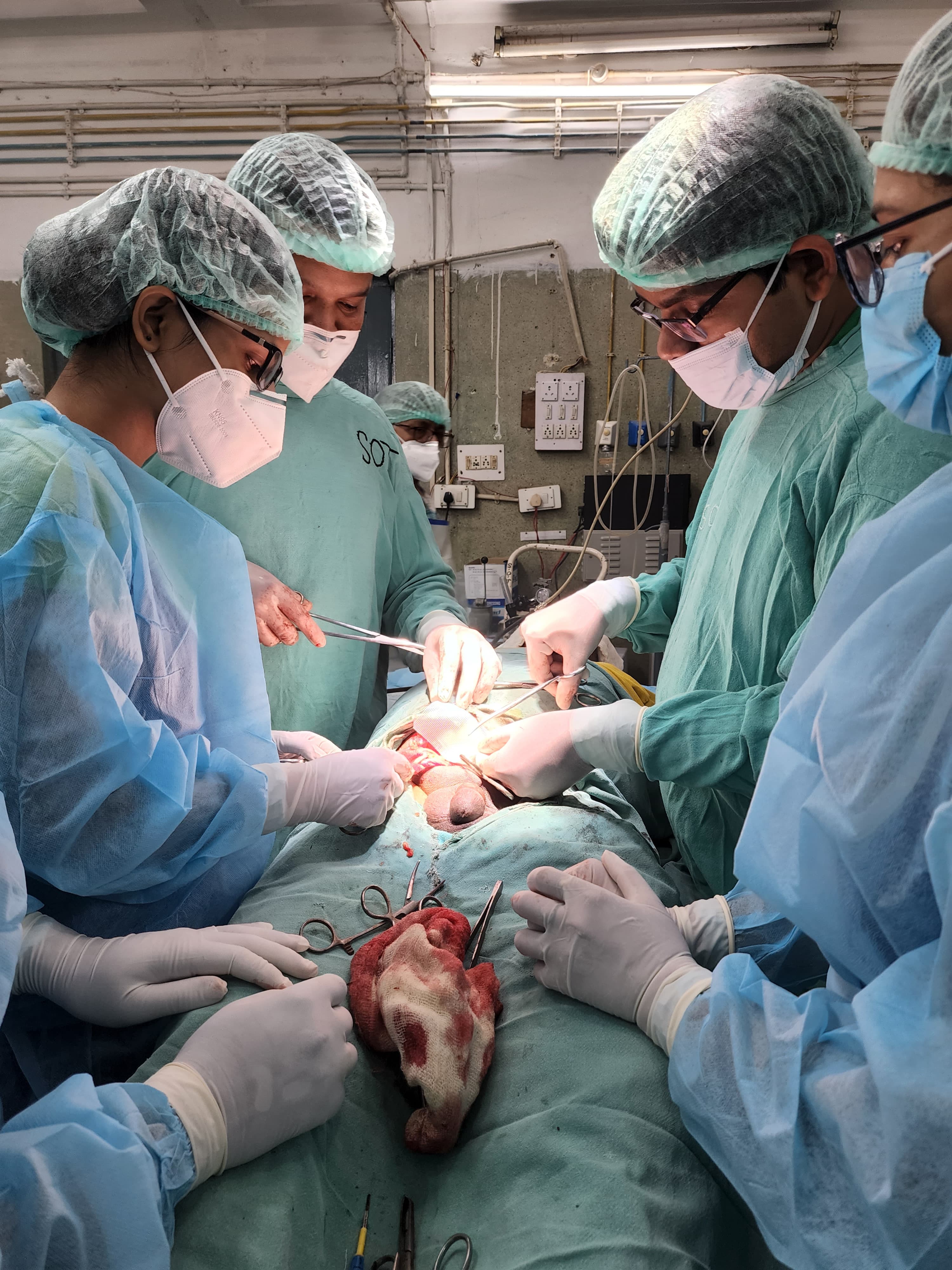
Closing the fistula without cutting the sphincter muscles. Dr. Ranvijay Bharti performs FiLaC laser closure at Doctors Divine Multispeciality Hospital.
Antibiotics can calm the infection, but the tract stays. It needs a proper surgical check-up.
See the doctor todayA fistula won't go away with antibiotics alone.
Infection in a gland inside the anus forms a pus boil (abscess). When it bursts or is drained, a tunnel is left behind.
Pus, blood or watery discharge through a small opening beside the anus, with constant moisture and irritation.
The infected tract has to be cleaned and sealed. FiLaC destroys its lining from inside, so it closes and heals.
| FiLaC laser · Doctors Divine | Traditional open surgery (fistulotomy) | |
|---|---|---|
| Sphincter muscle | Not cut; preserved | Cut to open the tract |
| Risk of leakage | Very low, because the muscle isn't cut | Up to 15–30% in complex or high fistulas |
| Wound | No open wound; pinhole entry only | Large open wound |
| Recovery | Back to routine in 3–5 days | 4–8 weeks with daily dressings |
| Hospital stay | Day care, home the same day |
An anal fistula is an abnormal, infected tunnel connecting a gland inside the anal canal to the skin around the anus. It usually follows a pus boil (perianal abscess) that burst or was drained.
No. Unlike piles or a new fissure, a fistula has an infected tract that doesn't heal with antibiotics or ointments. Closing the tract surgically or with a laser is the definitive treatment.
FiLaC is a sphincter-saving technique in which a flexible radial laser fibre is passed into the fistula tract. The laser energy destroys and seals the infected tract from the inside, without cutting the surrounding sphincter muscles.
Open fistulotomy or fistulectomy cuts through the sphincter muscles to lay open the tract. In high or complex fistulas this carries a real risk of leakage of gas or stool, and leaves large wounds that heal slowly.
The laser fibre is passed through the tract itself, without cutting the muscle fibres, so the internal and external sphincters are kept. This keeps the risk of leakage very low.
With careful tract mapping (and an MRI or ultrasound when needed), FiLaC by an experienced surgeon like Dr. Ranvijay Bharti has success rates of about 85–90%, without risking the sphincter muscle.
Stop the painful discharge and protect your muscle function with FiLaC laser surgery at Doctors Divine, Nawada.
| 2–4 days |